2020-2021
UX, UI, Product Design
UX/UI Lead

Scopify.ai helps sales teams, marketers, and executives book more qualified meetings with potential clients. Using machine learning, the platform streamlines lead generation by curating and personalizing high-quality prospects tailored to each team's specific goals.
B2B sales and marketing teams waste time and budget on unqualified leads and misaligned outreach.
An AI-powered platform that aligns demand generation with inside sales, helping teams focus on high-intent prospects and close more deals.

UX research
UI/UX design
User testing

Initial research explored how teams currently approach B2B lead generation and where existing solutions fall short.
What solutions currently address the top of the sales funnel?
How much time and budget do teams lose to inefficient prospecting processes?
What challenges do marketing teams face in generating qualified leads?
What obstacles prevent sales teams from closing deals efficiently?
Competitors' strengths and weaknesses were mapped to identify opportunities for Scopify to deliver a differentiated user experience in the B2B sales intelligence space.

In-depth interviews were conducted with 10 sales and marketing professionals to uncover pain points, frustrations, and unmet needs in their current lead generation workflows.
Traditional scoring models rely on surface-level metrics like email opens rather than meaningful signals such as deal size or buyer intent. Teams waste time chasing low-priority leads while high-value opportunities go cold.
Marketing teams invest heavily in account-based campaigns, but much of their content goes unused. Without proper distribution to engaged stakeholders, these efforts fail to generate warm leads for sales.
B2B deals require buy-in from multiple stakeholders, but sales reps often can't identify all the decision-makers involved. This blind spot makes it difficult to build consensus and move deals forward.
When leads move from Marketing to BDRs to SDRs, critical information disappears. Sales teams waste time hunting for context or re-qualifying leads, which slows the pipeline and risks losing interested prospects.
Low MQL-to-SQL conversion rates force sales teams to spend more time vetting leads than closing deals. This drains resources and directly impacts revenue growth.
Without transparency into how leads are sourced and scored, reps question the quality of their pipeline. This skepticism leads to inconsistent follow-up and missed revenue opportunities.
A journey map was created to place some market research into context. Real numbers and percentages are shown to reflect pain points at every stage of the sales pipeline.

After conducting research, all the findings were synthesized to identity themes, opportunities, and features that Scopify could focus and improve upon.
A series of 3 personas were defined based on the data collected to help drive design decisions and keep the product focused on solving users pain points, frustrations, and their goals.


Insights from the discovery stage are reframed into opportunities in the sales and marketing problem space through HMW statements. These were then mapped to a user journey to draw connections.

Structuring ideas through prototyping and mock-ups based on the feedback and insights gained from research and analysis.
The primary user flow is the process of prospecting, intelligent messaging, and booking a meeting. The information architecture was informed by multiple card-sorting sessions with prospective users.
.png)
A few rounds of solution sketching followed by a low-fidelity prototype was created to iterate upon. Using the feedback and insights gained from these iterations, the prototype is continuously improved upon.

A style guide was built to serve as the one source of truth for all design and creative initiatives. They are categorized into Primitives, Iconography, and Components.

Scopify streamlines B2B prospecting by surfacing pre-qualified leads that match each team's ideal customer profile, then providing AI-powered insights and messaging tools to accelerate deal progression.
Browse pre-qualified leads that match your ideal customer profile. Scopify's data intelligence filters out irrelevant prospects, surfacing only high-potential accounts.
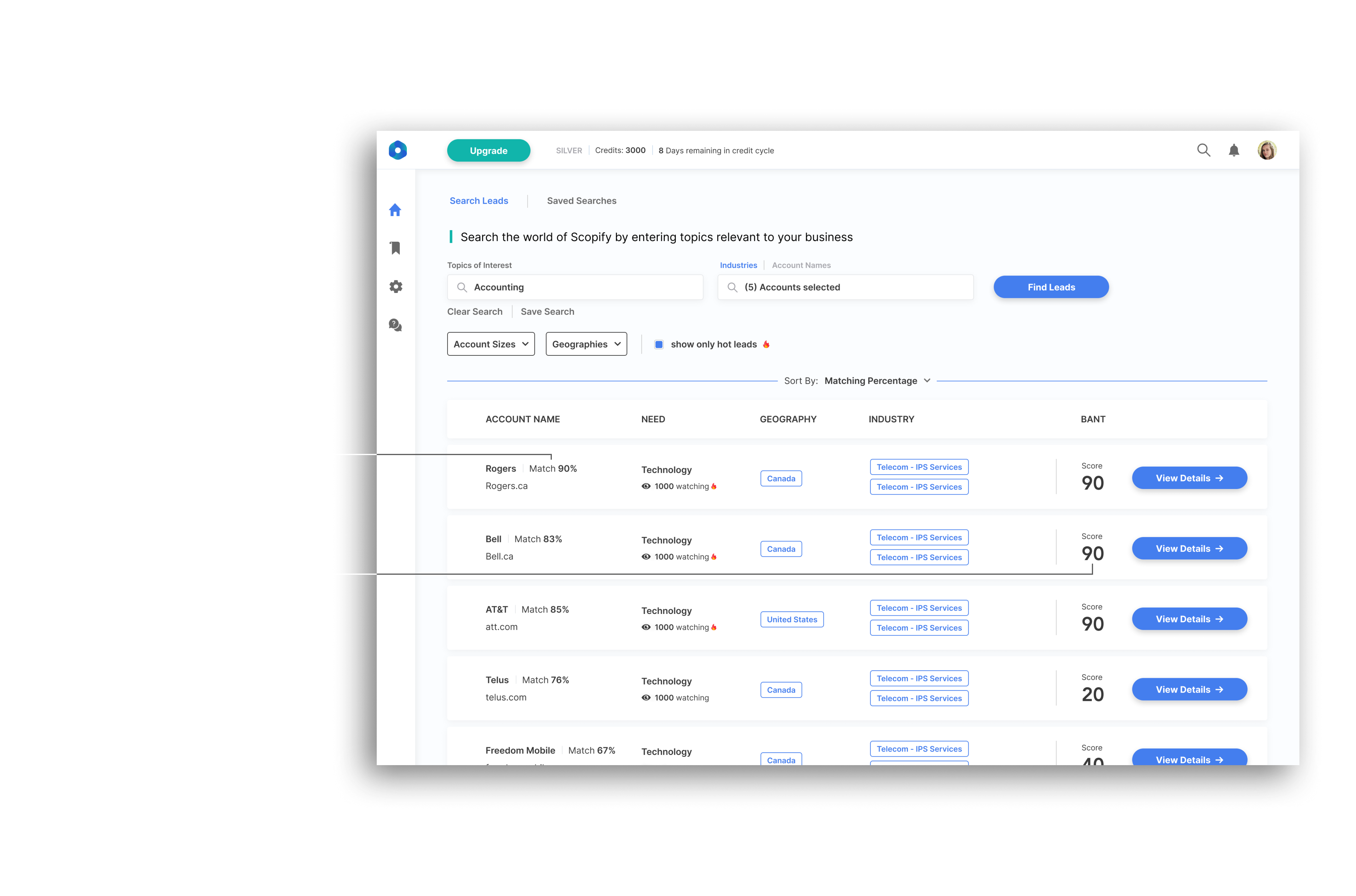
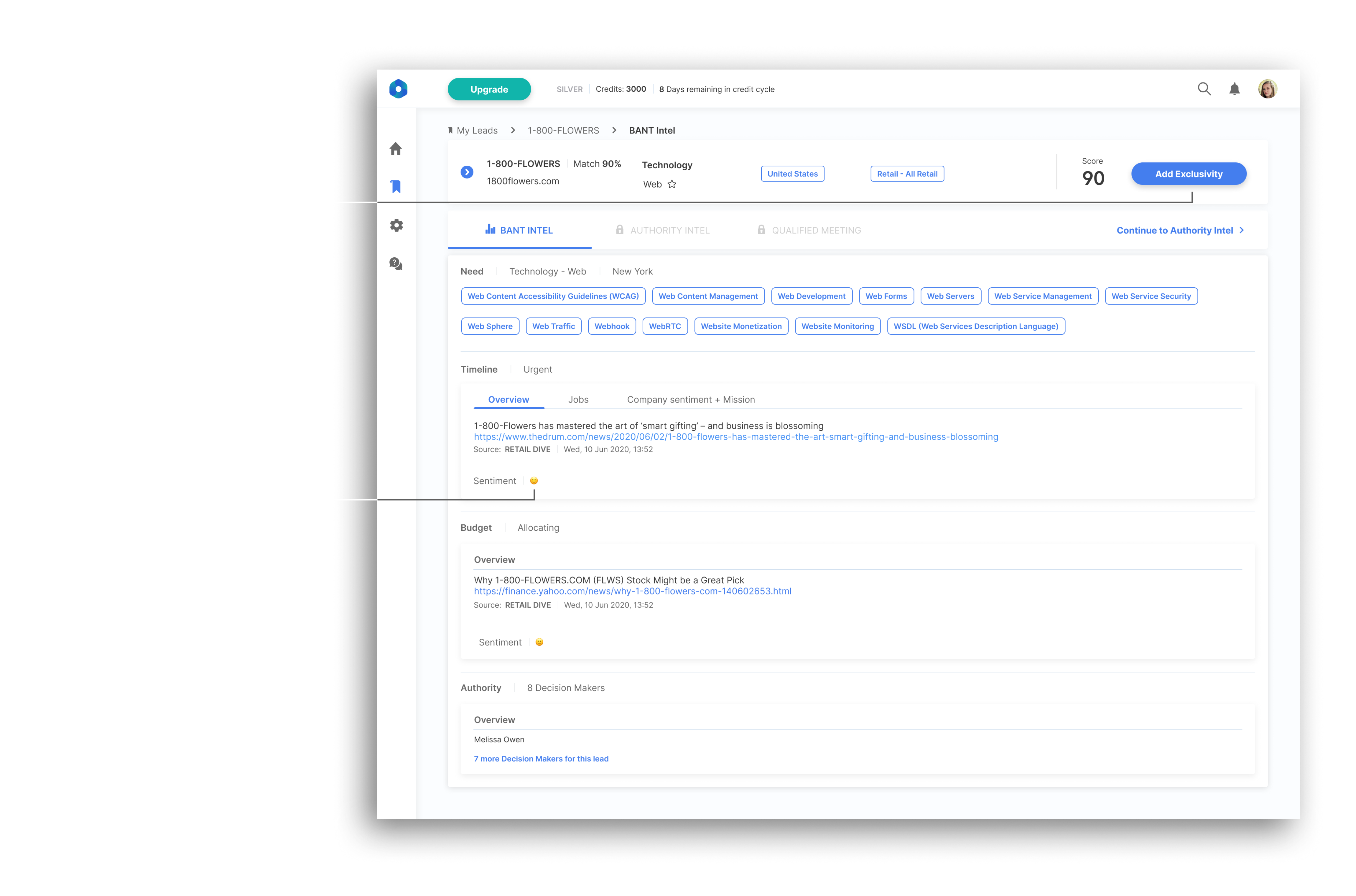
Access Budget, Authority, Need, and Timeline data to quickly assess whether a lead is worth pursuing and prioritize outreach accordingly.
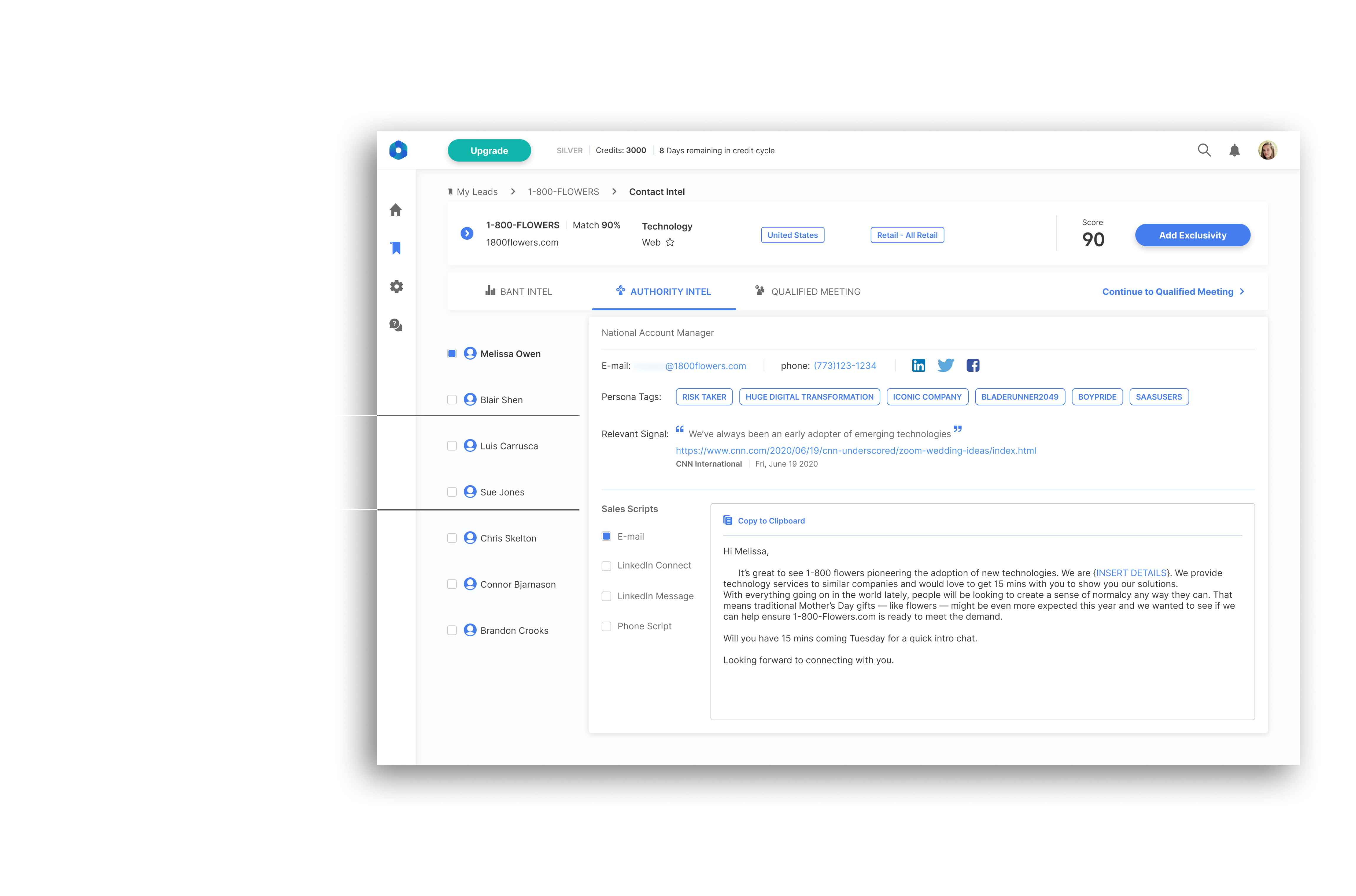
Identify key decision-makers with detailed contact information, role context, and behavioral signals to inform your engagement strategy.
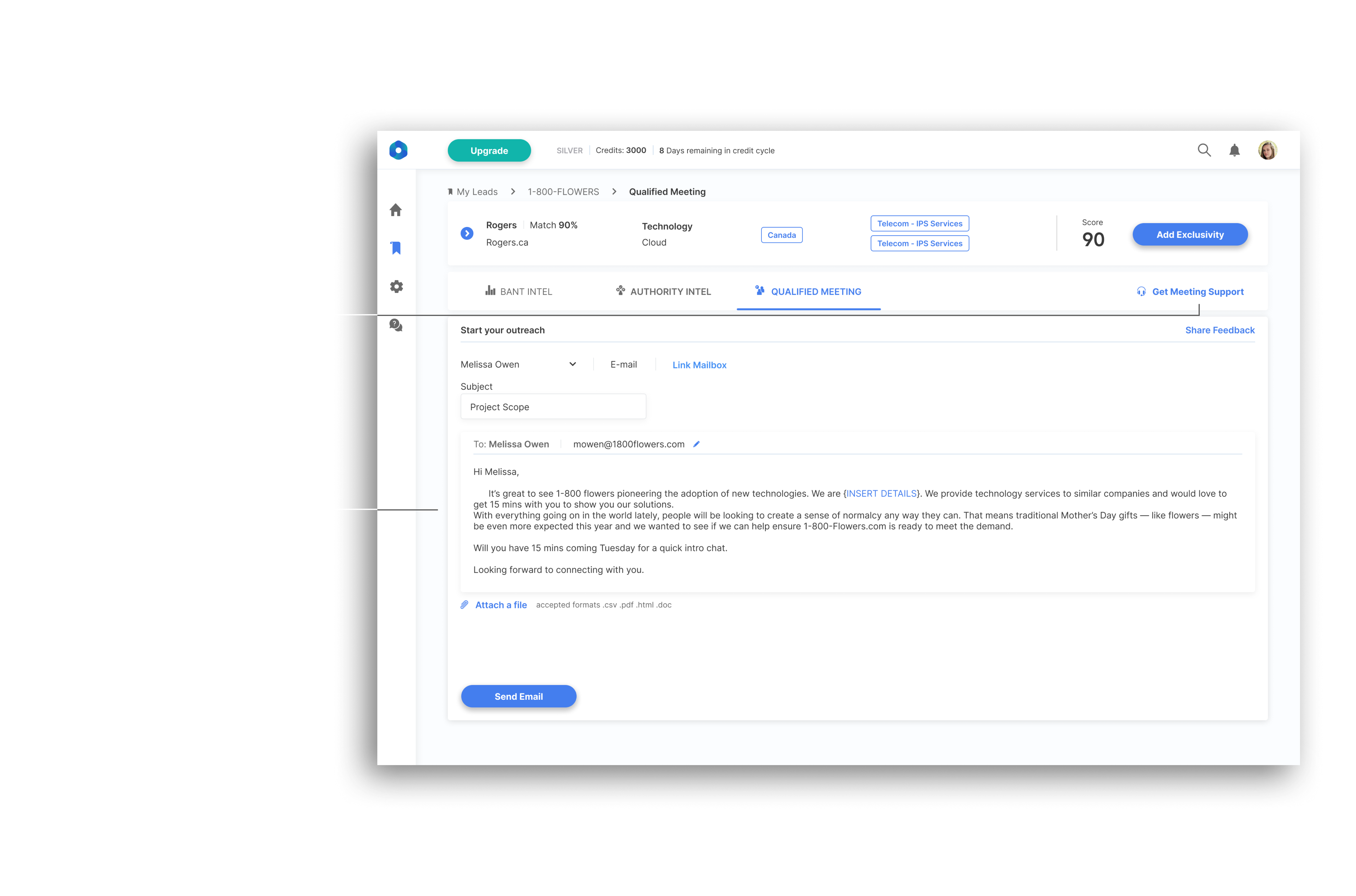
Send personalized outreach directly through Scopify to book meetings with decision-makers and move deals forward.
Rate the accuracy of lead and decision-maker information to help train Scopify's algorithm. User feedback continuously refines data quality and improves match scoring over time.

42 sign-ups in first 3 months after beta launch, with 64% of users returning within the first week
23% increase in meeting bookings for the 15 active sales teams using the platform regularly
Average rating of 4.1/5 with users reporting better lead quality and reduced time spent on manual prospecting
Balancing Automation with Control
Early concepts leaned heavily on full automation—AI would handle everything from lead scoring to message sending. Through testing, I learned users wanted to maintain control over outreach. I redesigned the system to position AI as an assistant that suggests and drafts, while users retain final approval. This built trust and increased adoption.
Prioritizing Speed Over Customization (MVP)
Users requested extensive customization options for lead scoring criteria and messaging templates. Given our timeline and technical constraints, I focused on delivering a curated set of high-performing templates with basic personalization tokens. This allowed us to ship faster and validate core value before building advanced customization.
Single Dashboard vs. Role-Specific Views
Marketing and sales teams have different priorities, and initial research suggested separate dashboards. However, this would fragment the handoff process we were trying to improve. I designed a unified dashboard with role-based filters and perspectives, keeping teams aligned while surfacing relevant information for each user type.
Mobile-First Deferred
While 40% of sales reps check leads on mobile, building responsive experiences would have delayed launch by 6+ weeks. I advocated for a desktop-first MVP with a mobile-optimized view for notifications and quick actions, planning full mobile support for the next phase based on usage data.


